

Greetings from winter in Douro Valley - a time for wines and vines to sleep, and for us to reflect on 2025 and prepare for 2026.
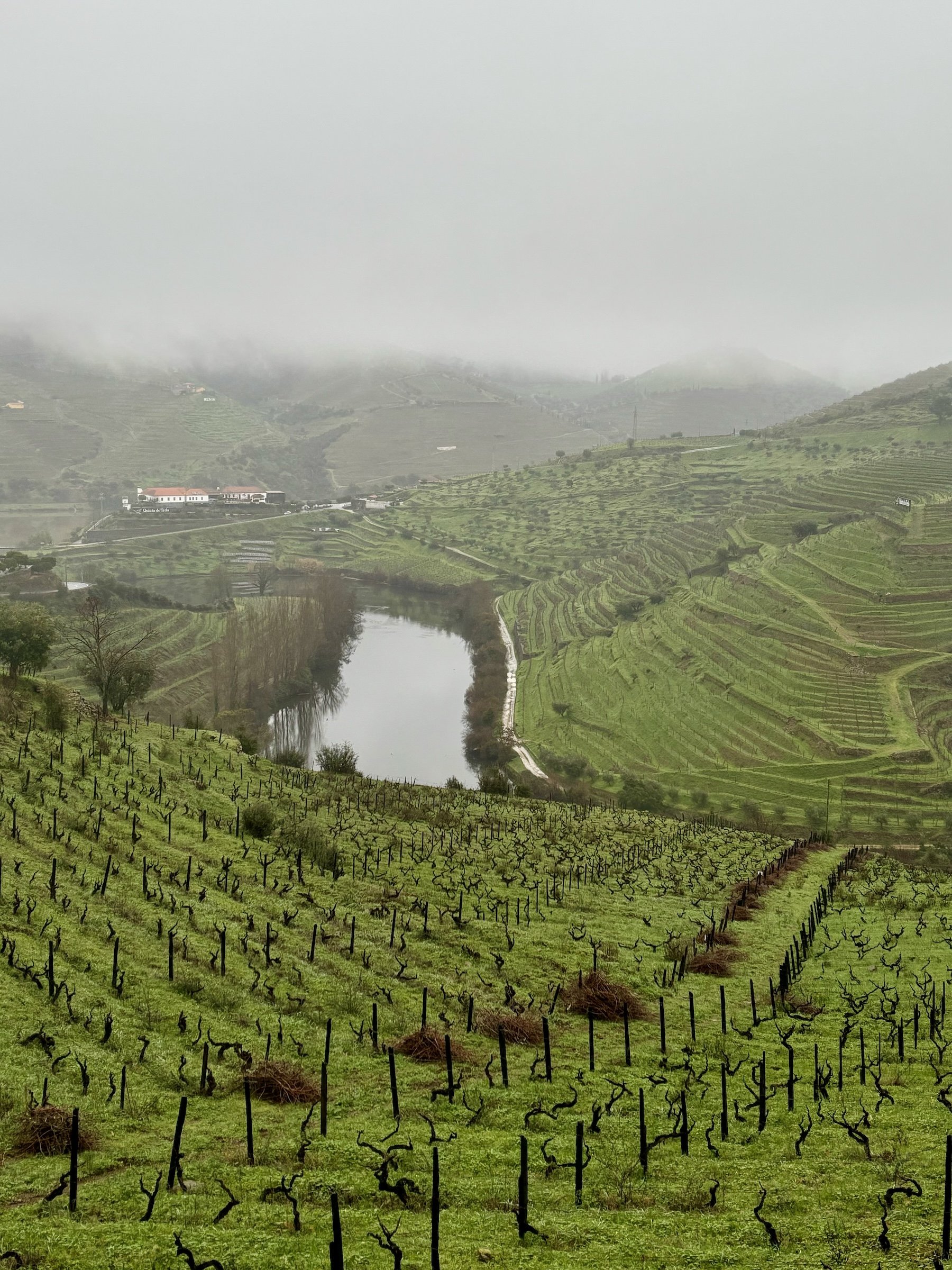
As the next generation at Quinta do Tedo, my brothers and I have inherited the responsibility to caretake the 18 hectares of land our parents, Vincent and Kay Bouchard, purchased in 1992.
Vincent always said his goal was never to force this land into a Burgundian vision of what it could be, but to preserve the uniqueness of what was already here — the 18th century estate’s lagares for foot-treading and aging cellars, the polyculture of native grape and olive varieties and dry stone walls terraces they grow on, the mediterranean shrub forests, and the Tedo River.
My responsibility, as the next generation on-site full-time, is to continue to invest in this Tedo Valley ecosystem — to nurture its biodiversity, longevity, and potential to produce healthy and balanced fruit to make quality Portos, Douro DOC wines and Extra Virgin Olive Oils year-after-year, to share with our visitors, customers and partners around the world.
Today, the great challenge my generation faces is to continue what our parents started in rapidly and unpredictably contexts, amidst global political and economic instability, changing consumer trends and, perhaps the most daunting, climate change.
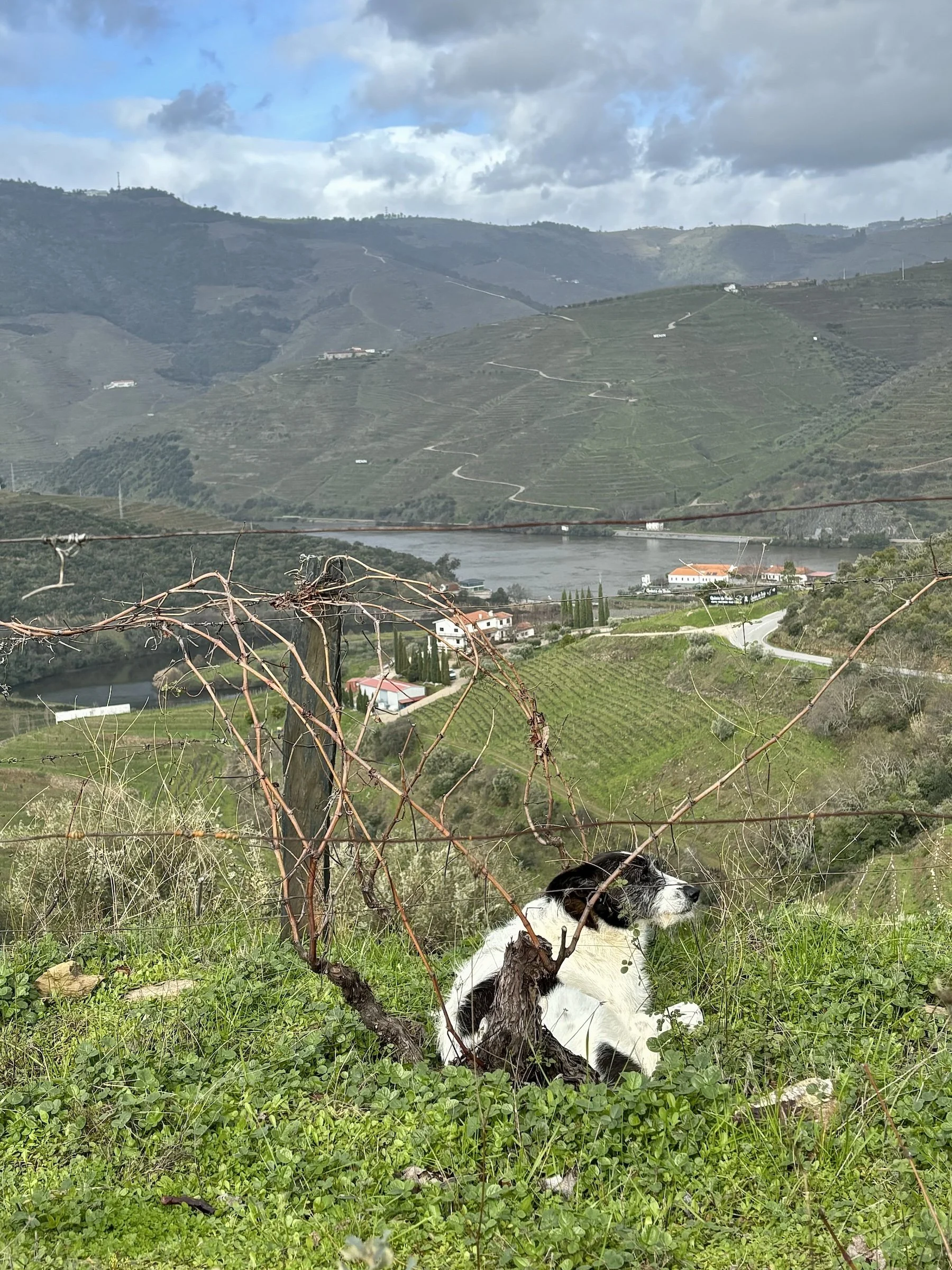
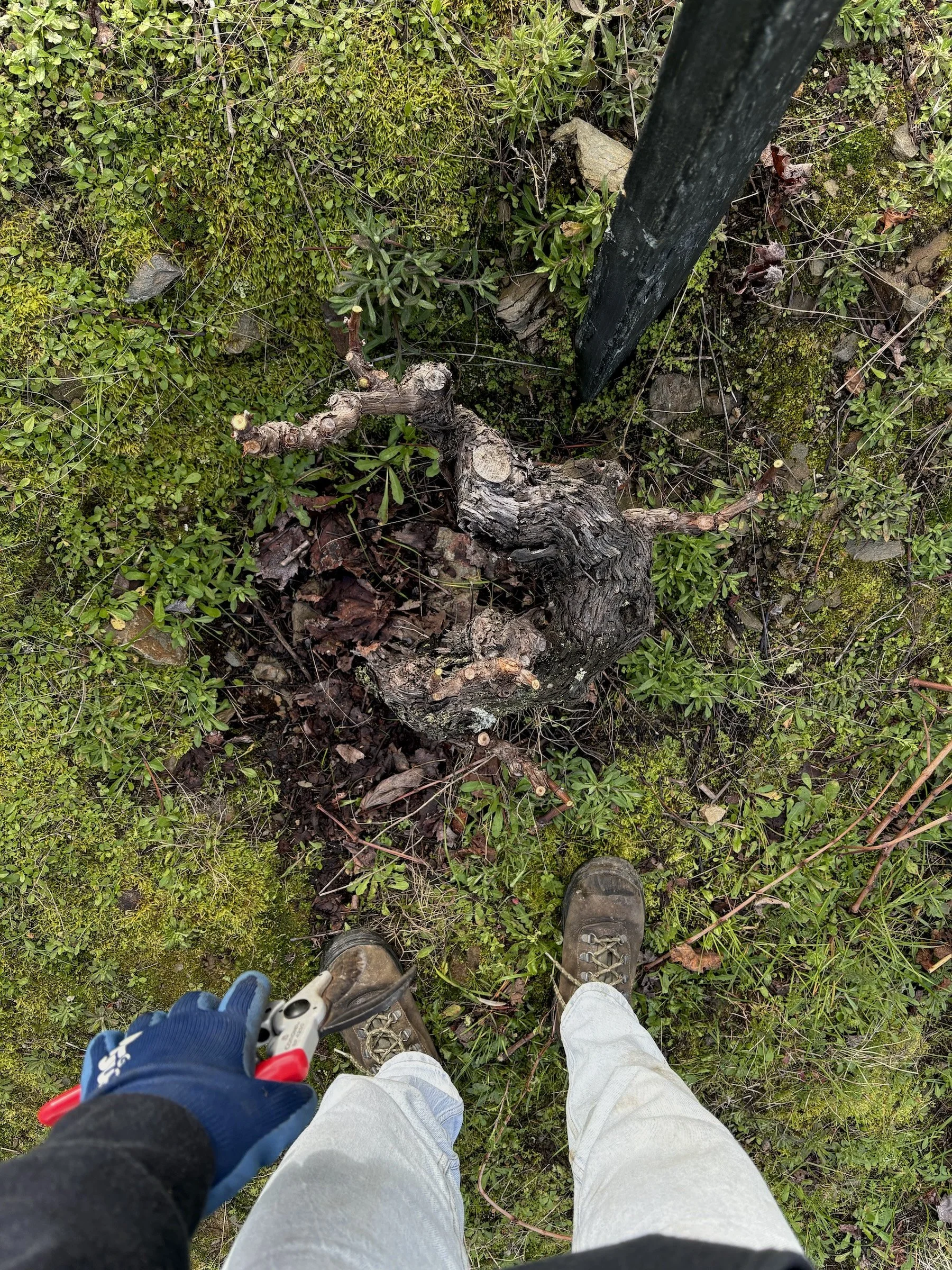
Since 2023, I’ve pruned (usually in the company of Lula and Ardinia) a small section of our old vine field blend, to quench my biologist impulses, to understand pruning beyond textbooks, and to each year produce better wine that speaks to the fruit and land it’s made from.
In 2026, I took on more viticulture responsibility at Quinta do Tedo — working with a local Organic Viticulture Consultant and our full-time Agriculture Technician to budget, plan, improve and test our viticulture reality, to ensure it’s resilience in whatever conditions climate change throws at us in the coming decades.
A 2023 study highlighted cold air pooling and unprecedented rainfall as two significant climate change impacts on upper Douro Valley vineyards.
Cold air is denser than surrounding air and pools in valleys, trapped by hillsides. This phenomena is more prominent at night, and peaks 6 hours before sunrise.
Our hot and dry Douro Valley region could actually benefit from cold air pooling, especially where there’s low chance of frost, like at Quinta do Tedo’s low elevation and proximity to Tedo and Douro Rivers which buffer temperature fluctuations. Cold air pooling could delay bud break (when vines emerge from winter dormancy) and compensate vines’ increasingly rapid growth, and fruit set and maturation, with increasing Spring and Summer temperatures. Cold air pooling could also cool heat stressed vines before Harvest, and increase fruit quality by prolonging tannin, aroma and sugar maturation.
Excessive rainfall in a short period of time, especially when soils struggle to retain it, on the other hand, can impact different phases of vines’ vegetative cycle negatively.
Late Spring rainfall comes with higher fungal disease pressure and can damage vines’ delicate new shoots and flowers after bud break, inhibiting fruit set and lowering yields. Harvest rainfall teeters on a fine line between beneficially rehydrating parched fruit and increasing yields, and detrimentally disrupting picking operations of diluted or water-busted and infected fruit.
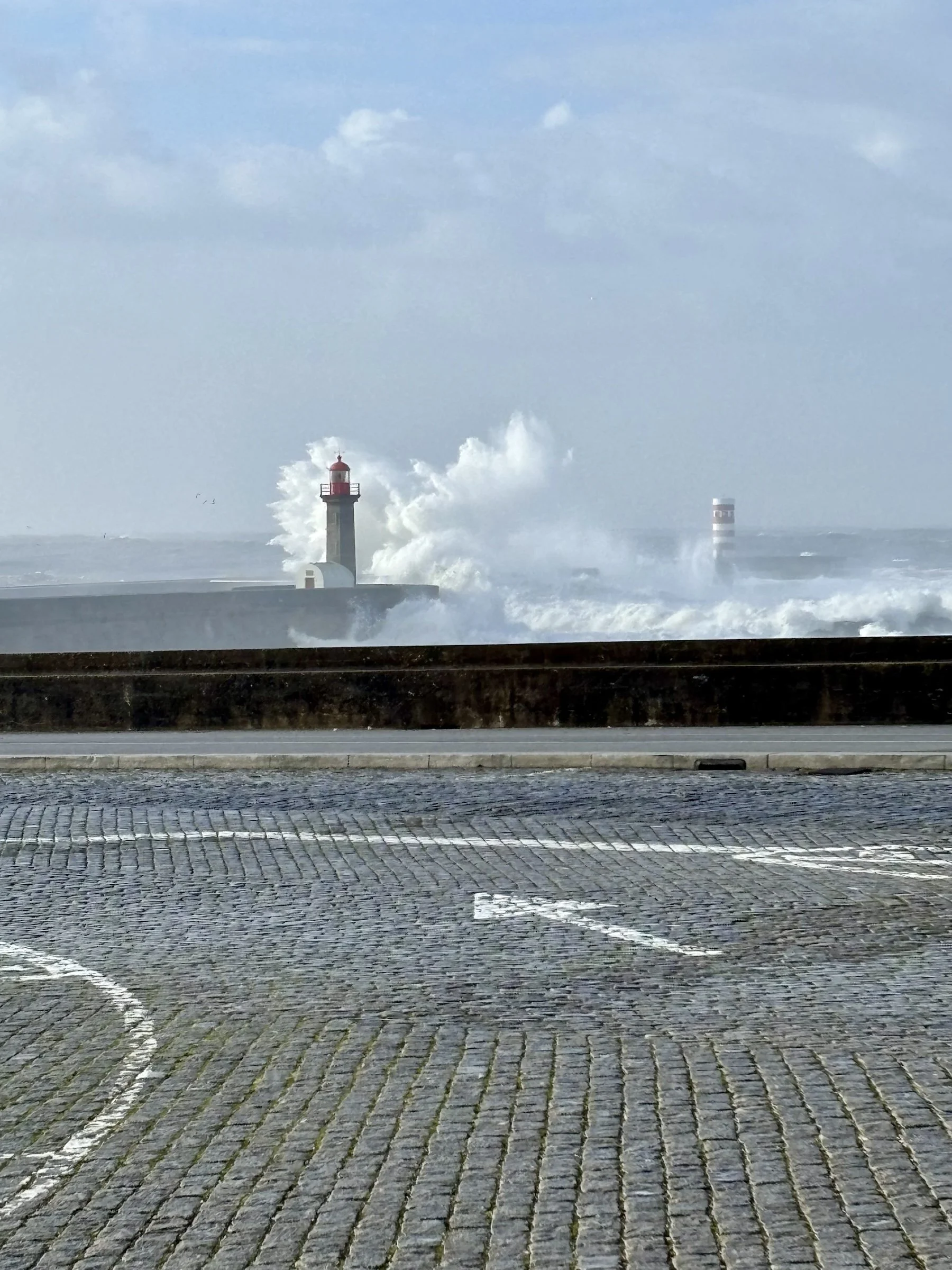
Thus far, winter in Douro Valley has been the wettest and stormiest I remember in my 30+ years visiting (and since 2020, living) here.
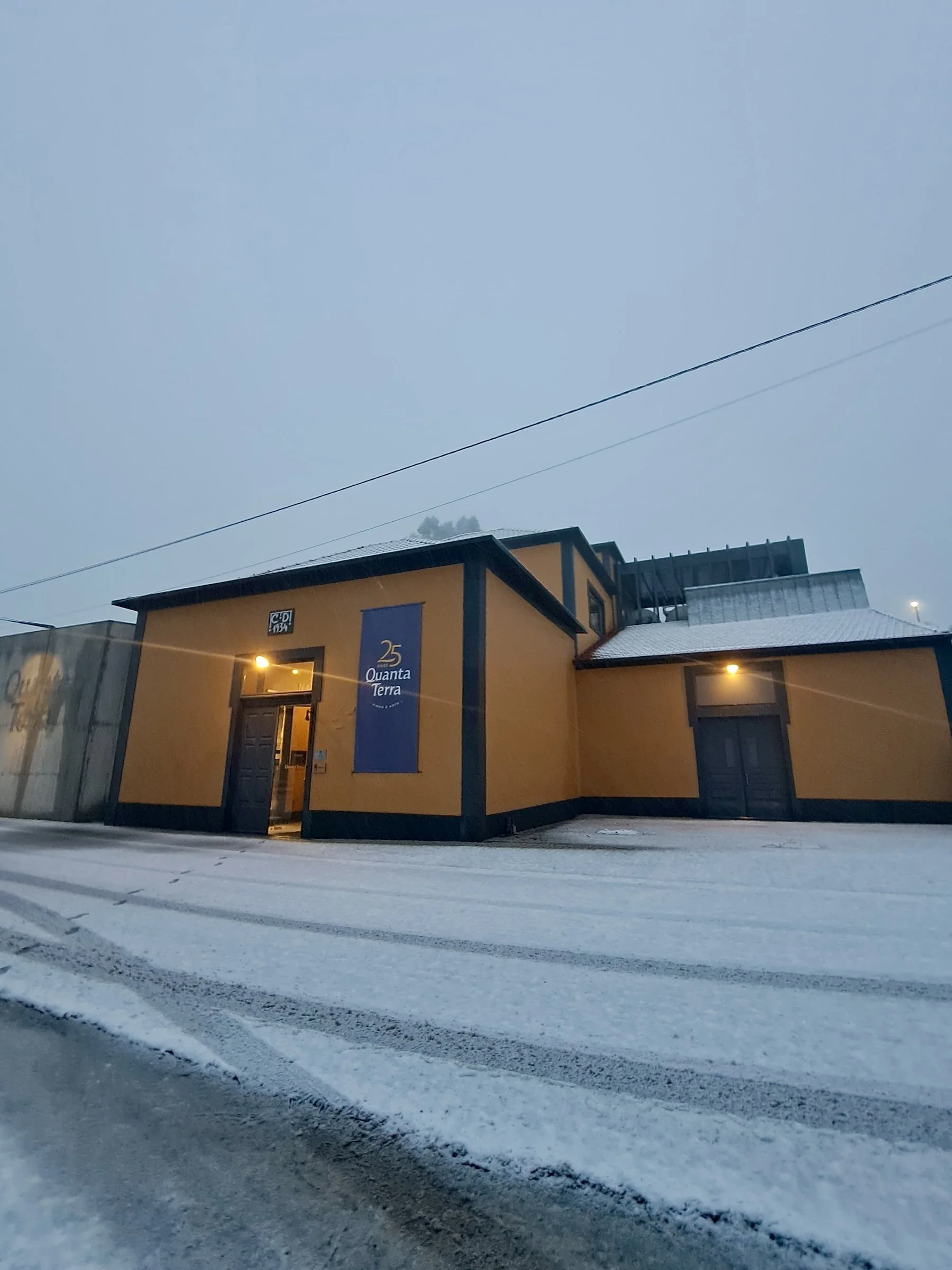
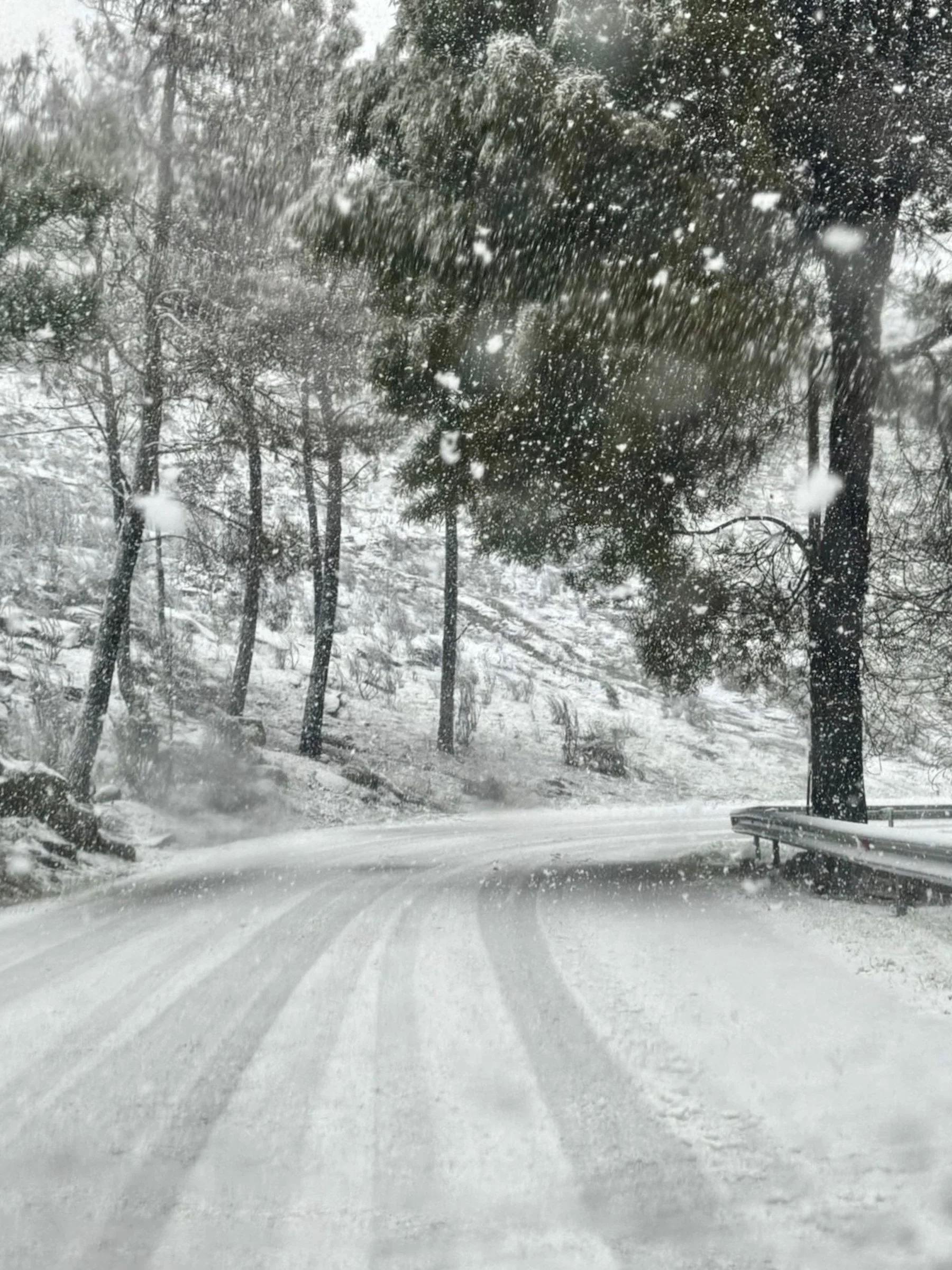
Pressure gradients have drawn from the west into mainland Portugal strong winds (up to 150 km/hr), 9- to 15-meter waves, and rain clouds from the Atlantic. Our Team Tedo has captured winter wonderland shots of Douro from some higher (600+ meter) elevation towns nearby, which haven’t seen snow in almost 10 years. Landslides, flash floods, and fallen trees have closed roads. Central Portugal has been thus far most heavily hit, with billions of euros worth of damage and 6 fatalities. The government approved a 2,5 billion-euro package to help individuals and business rebuild, but is that enough? And does that best prepare us for the next weeks of heavy rain and flooding, and a future of more erratic and extreme climatic events like these?
Douro’s steep-terrace vineyards are landscaped to avoid water pooling - they slope slightly backwards, to encourage Winter water to soak into the soil for vineyard roots to source from in dry Summer conditions, and they are slightly arched or angled to one end, to allow excess water run off.
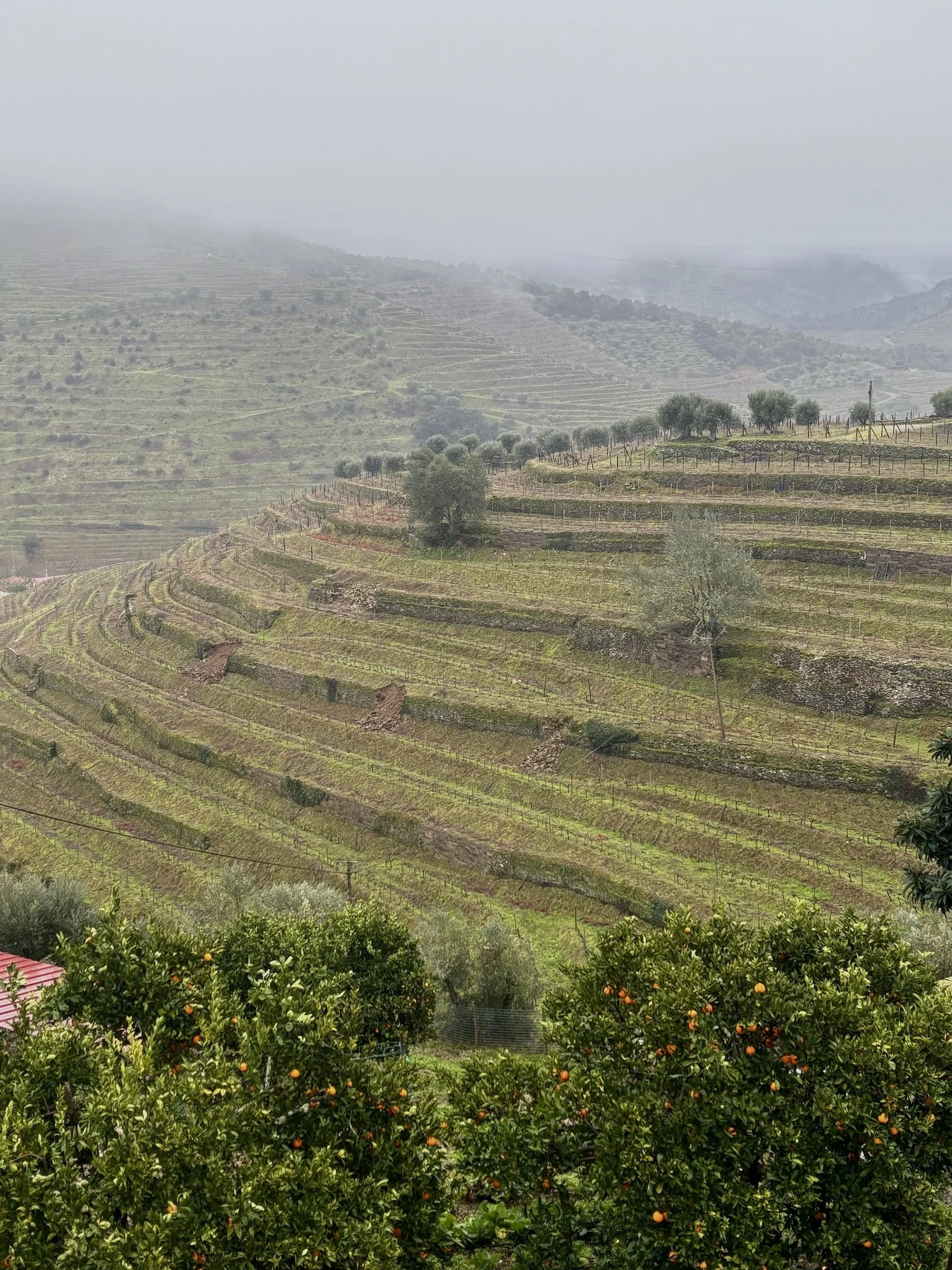
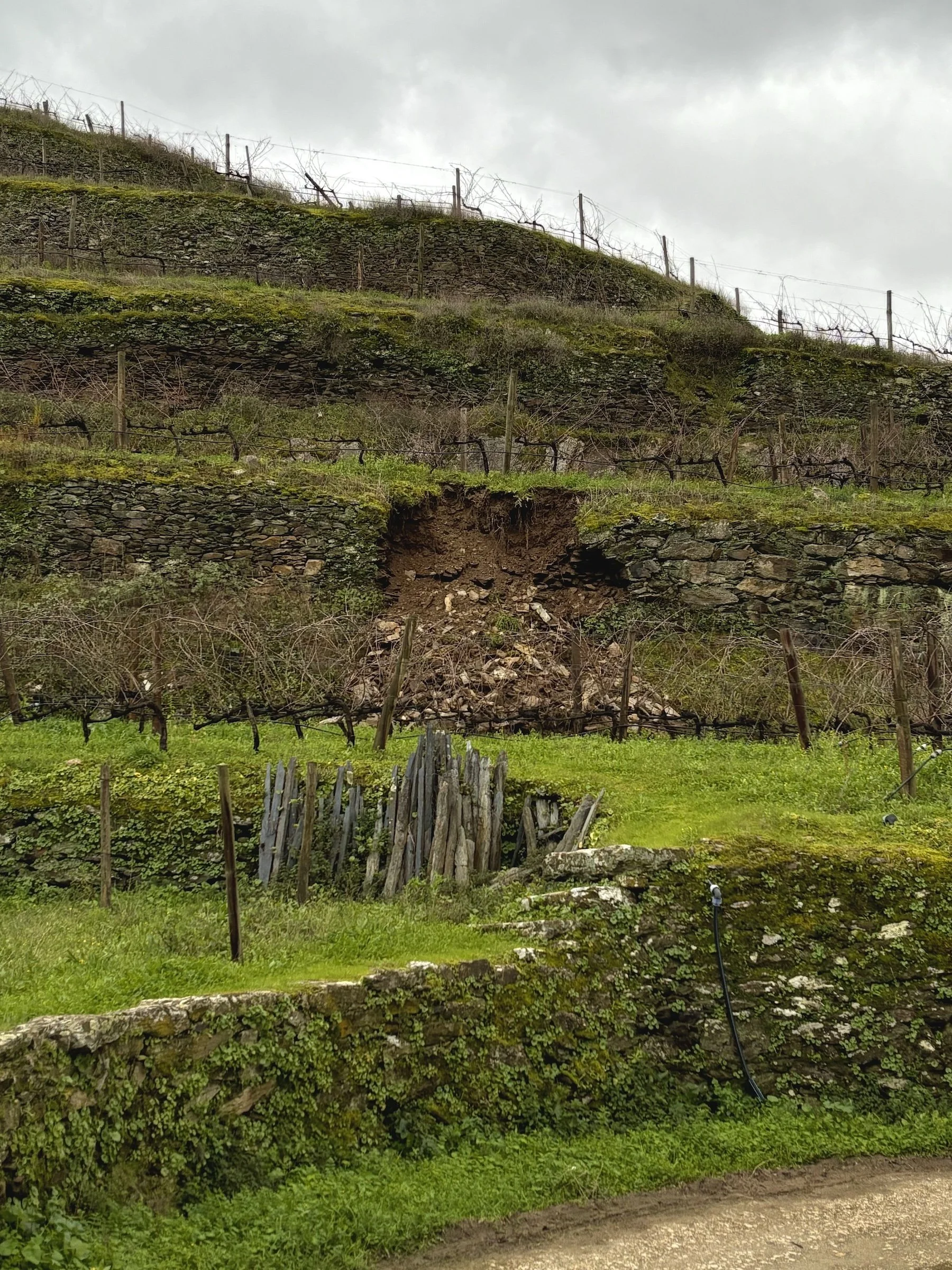
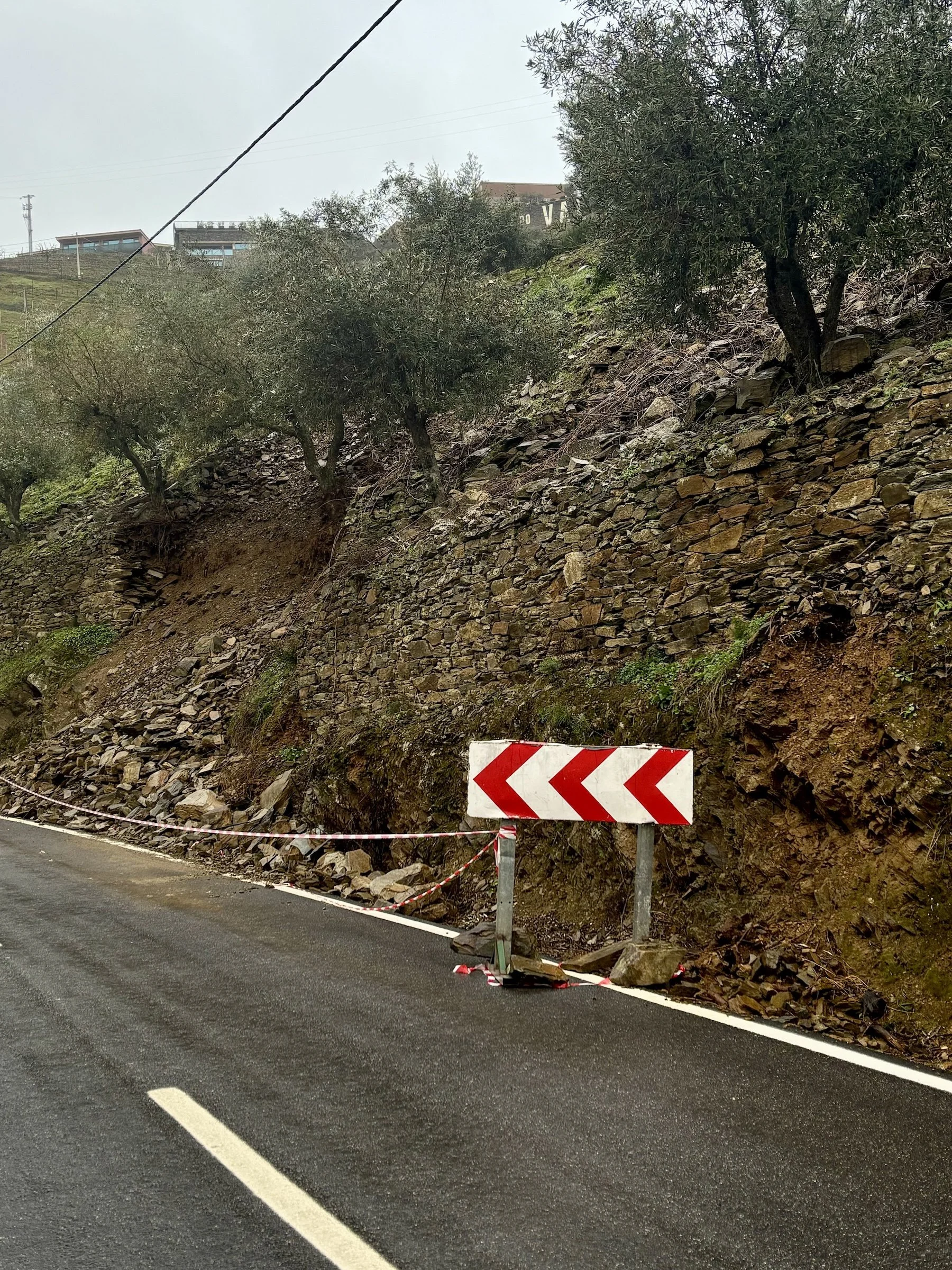
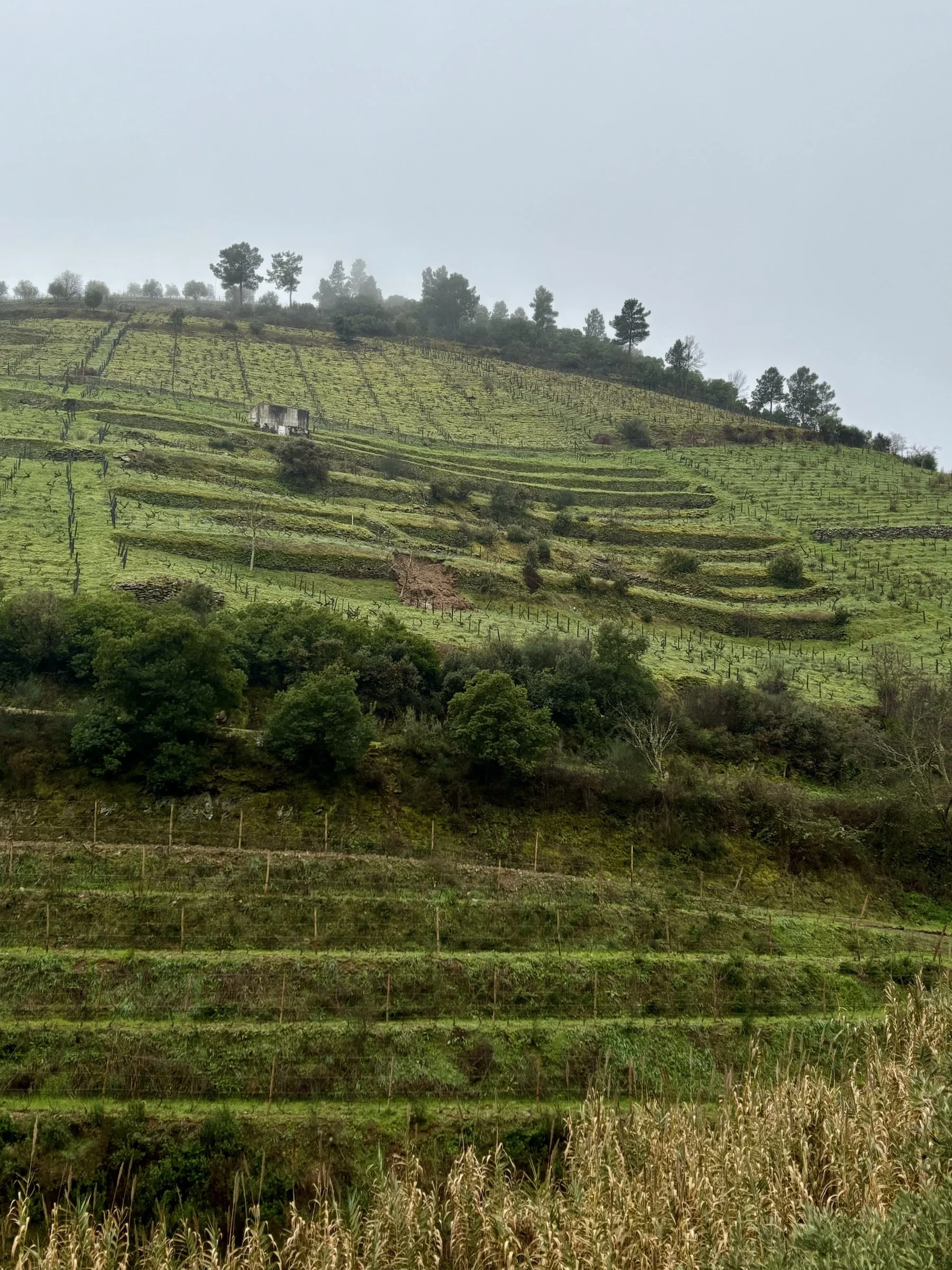
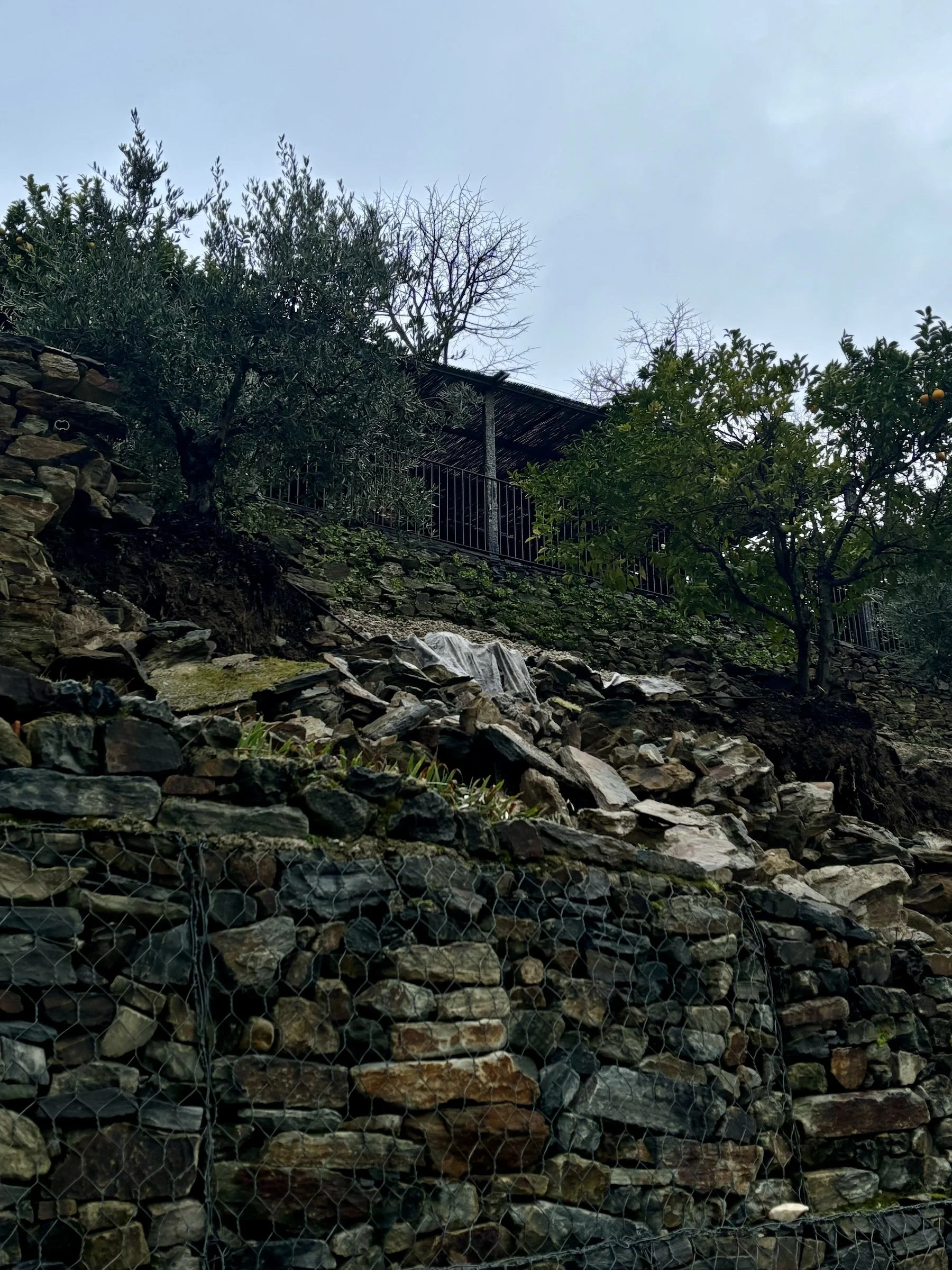
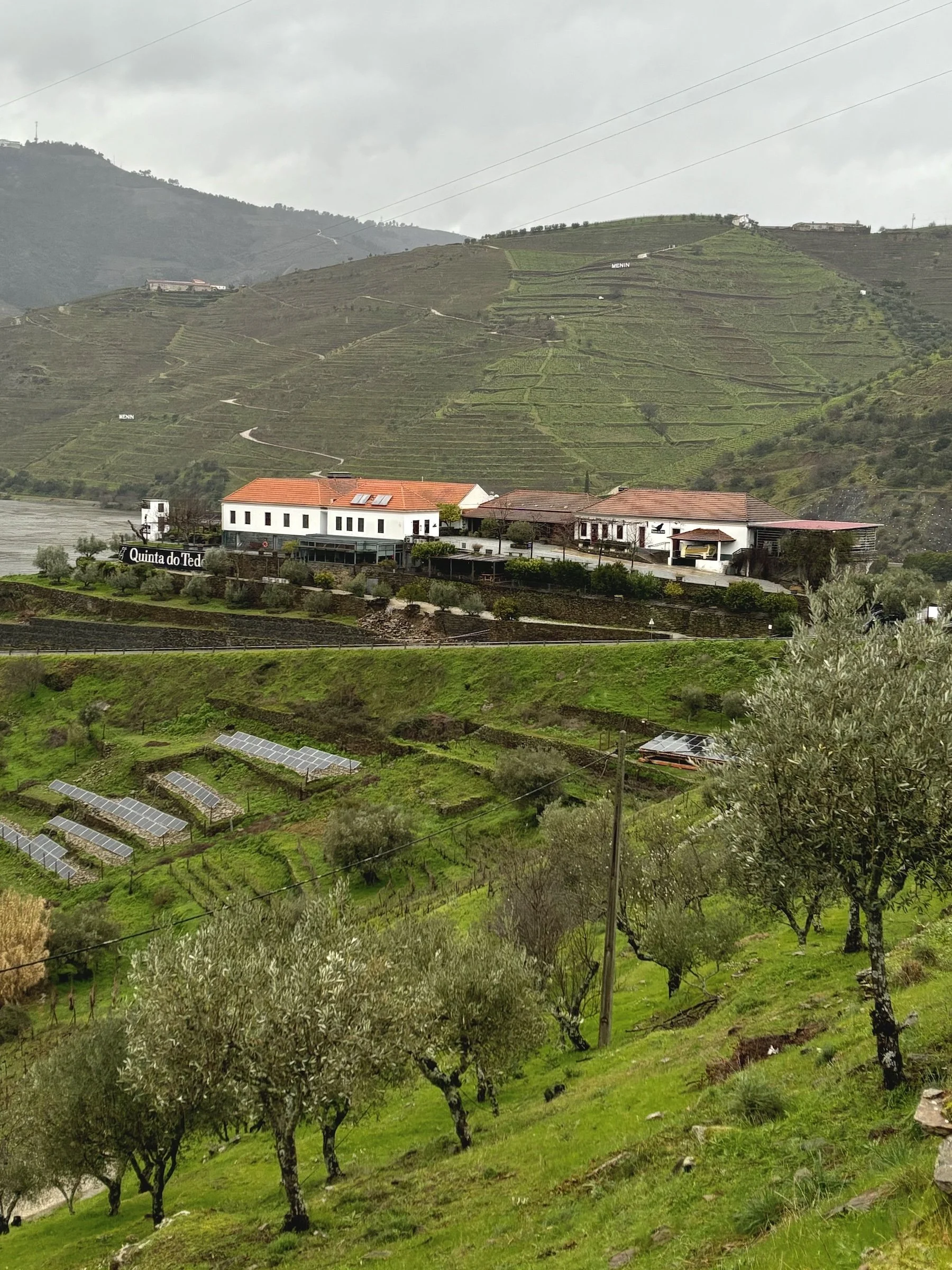
However, excessive rain from Storm Hermina last winter and back-to-back Storms Ingrid, Joseph and Kristin this winter, defy the precautionary functions of this vineyard landscaping. This causes flooding, which can suffocate important soil microbiology, erode taludes (the banks of Douro’s modern patamar vineyards), and collapse socalcos (Douro’s traditional stone wall terraced vineyards). As the latter are protected by UNESCO World Heritage, we are obliged to rebuild them. Over the past 2 years, we have rebuilt 15 collapsed sections of our 4 km of socalcos, a process which can take a few years and inhibits access to our vineyards they fell on.
All this to say, how should my generation best adapt to these unprecedented conditions, whilst also prepare for those unforeseen ones to come? Make the most of what we can control, learn from and share with others, experiment, respond cleverly to what we cannot control, and keep a positive mindset!
These wetter than average conditions are ideal for new plantings to develop strong and deep root systems — in March, we will “fill in” any holes in our vineyards.
Moreover, we are planting varieties that are naturally more resistant to disease (Touriga Franca, Tinto Cão) and retain acidity (Sousão), which do and will continue to challenge grape quantity and quality, considering warming temperatures and Quinta do Tedo’s lower elevation.
In our more exposed parcels that are more susceptible to sunburn and extreme temperatures, we have been spraying kaolin, a white clay that acts as sun cream, reflecting sunlight and slightly reducing the surface temperature of grapes and leaves.
Seeded and naturally-occurring cover crops increase soil porosity and biodiversity, outcompete dominante weeds, ensure important microbiological activity for good soil health and vine nutrition, and reduce erosion — we regularly seed cover crop in October, and continuously adapt our seed selection to our soils’ and vineyards’ needs.
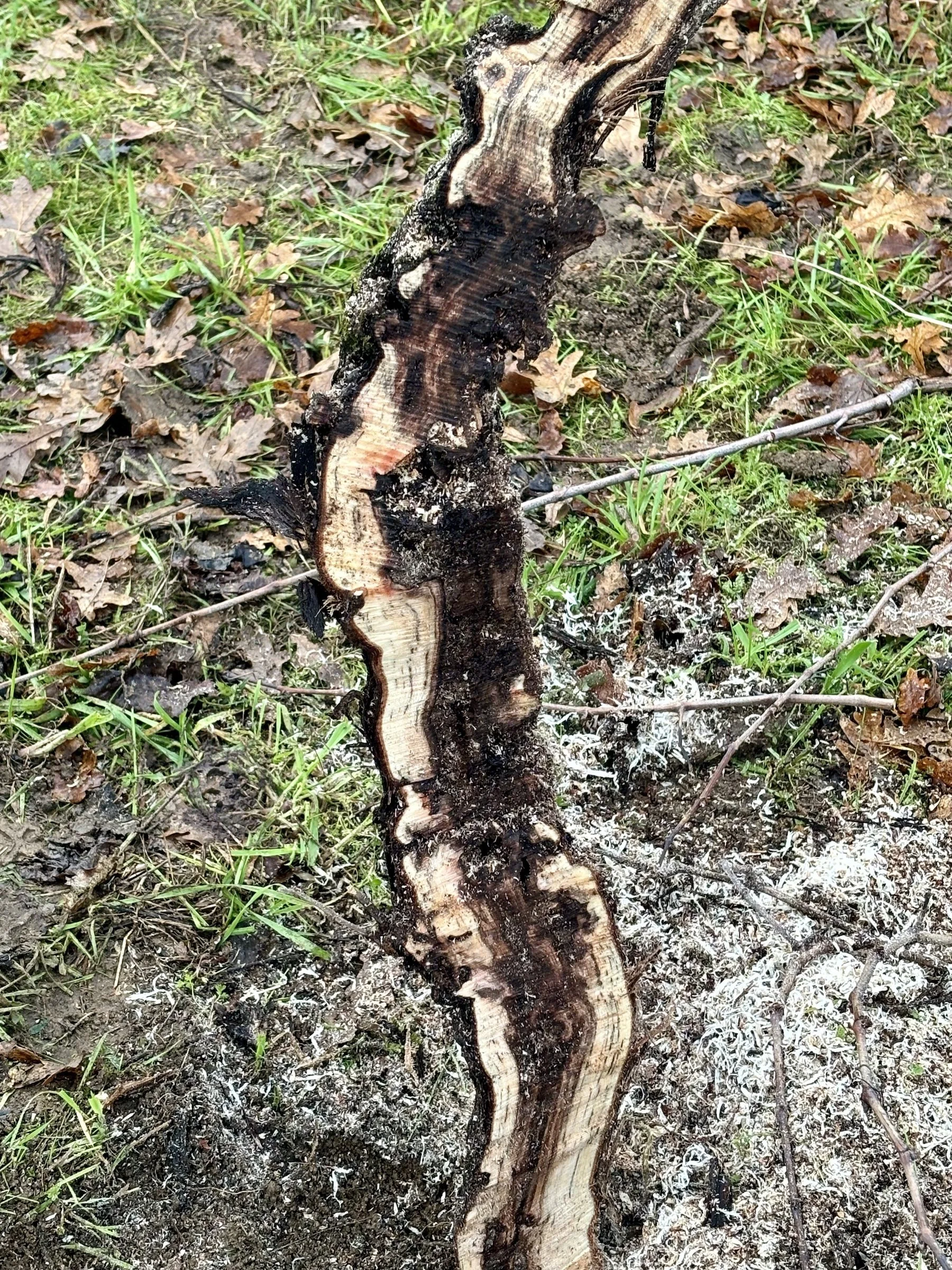
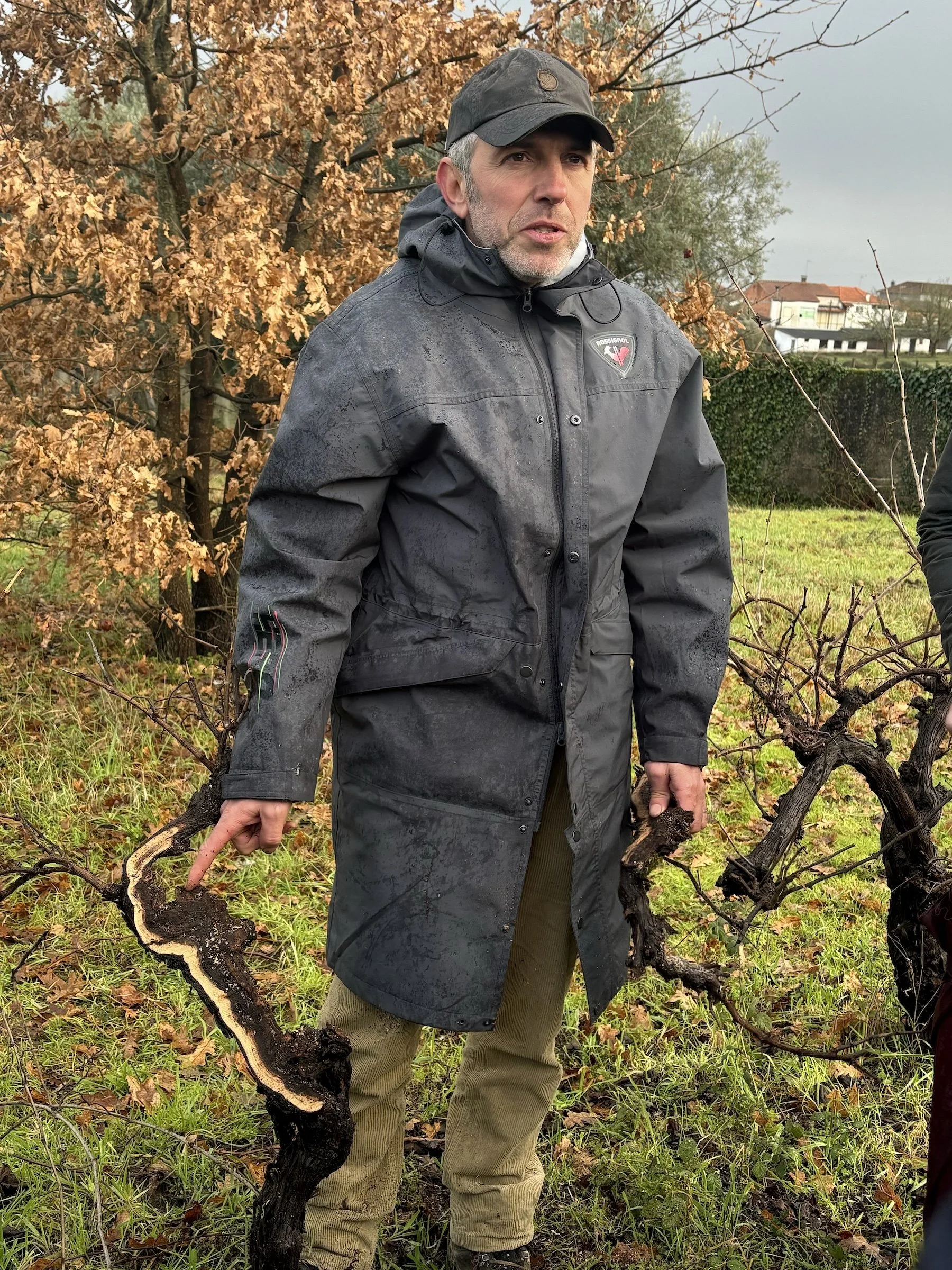
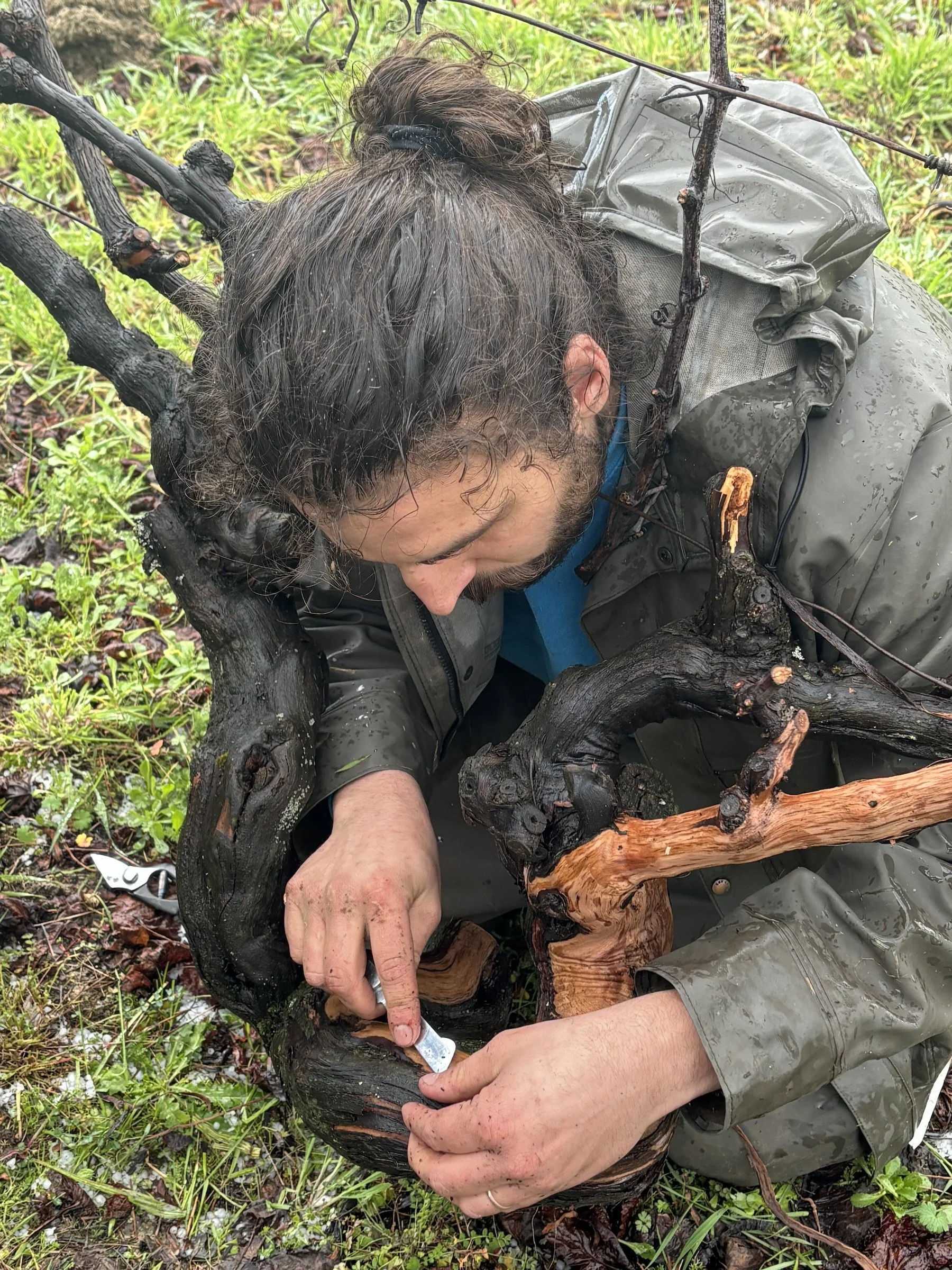
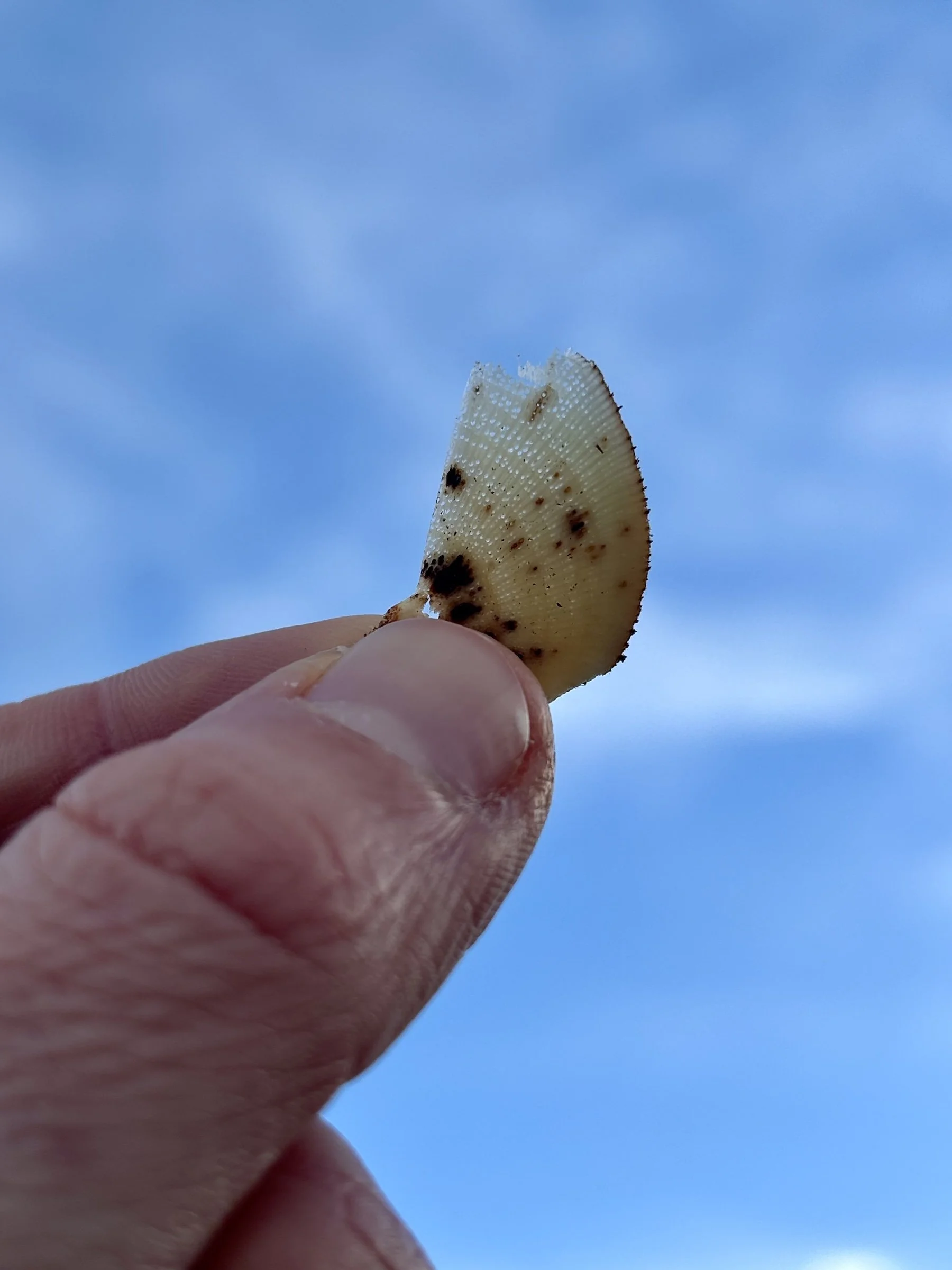
Come pruning (which should be well underway by now, but has been on hold since the storms), a longstanding practice in Douro is to make large cuts into old wood, to lower the fruiting zone and inhibit vines’ naturally upward creeping behaviour. Besides being large and running deep, these cuts are also levelled, to look clean and aesthetic. Such cuts allow diseases to enter the vine, inhibit sap flow, and reduce the vines’ energy reserves, leading to decreased immunity, longevity, and fruit yields and quality.
Pioneering agronomists Marco Simonit, Francois Dal, and Marceau Bourdarias promote “gentle pruning” — we are actively learning from these experts and fine-tuning our small, but mighty in-house viticulture team’s methods accordingly.
We have also been testing out the single Guyot pruning in a new parcel of Bastardo we planted in 2022, to train our vines lower to the ground, reduce the distance water and nutrients must flow between their roots and leaves, and manage their vegetative vigor and fruit yield, year-to-year.
We’re curious - how are you, or wine growers near you, adapting to climate change?
~ Odile Bouchard
